LinkedIn Fatigue: The Hidden Cost of Saturation
The hidden cost of saturation and the loss of meaningful conversations.
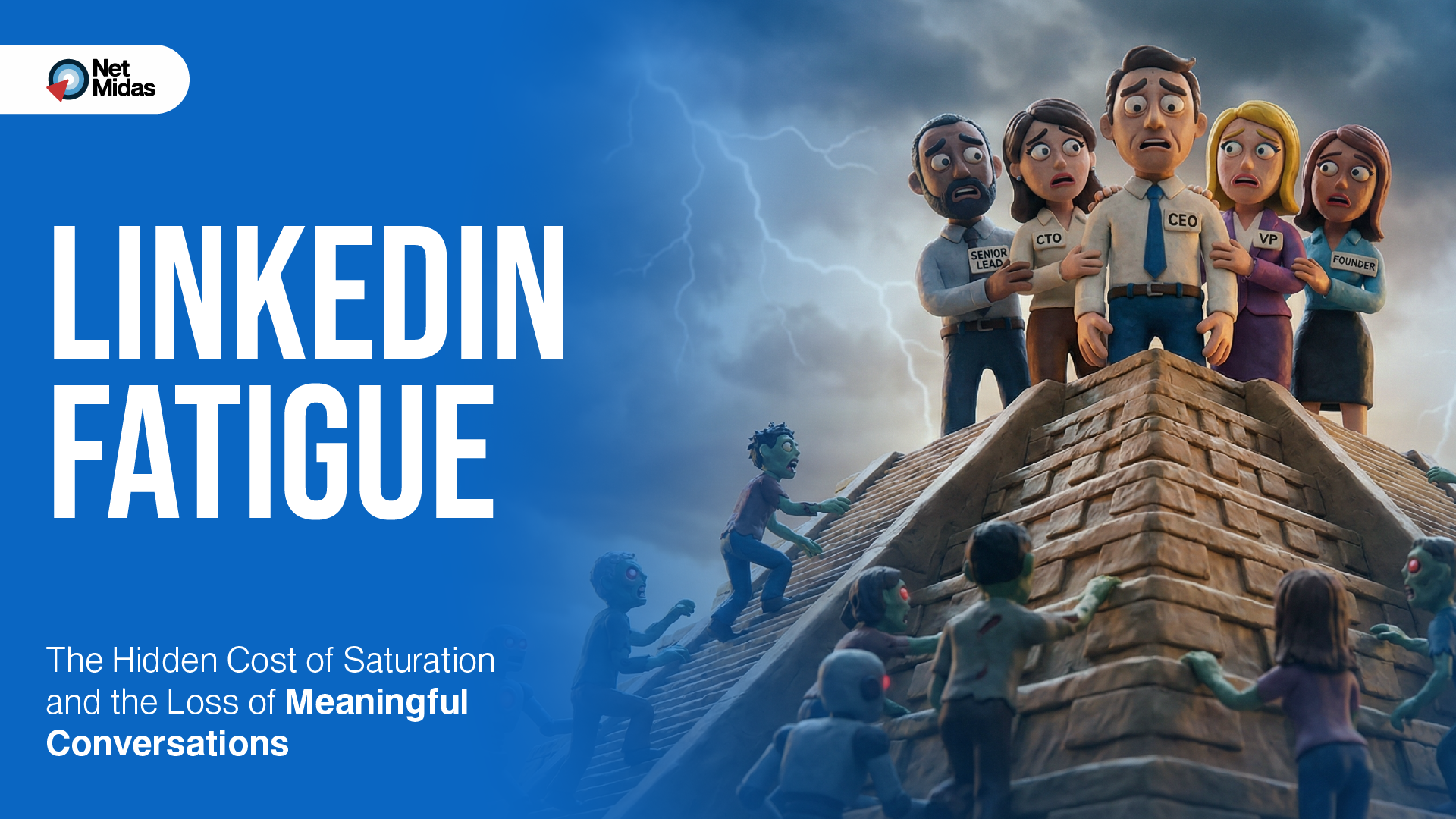
Many decision-makers now experience LinkedIn as an overwhelming deluge of automated messages, generic pitches, and surface-level interactions, resulting in LinkedIn fatigue.
This phenomenon carries real business consequences: the more companies depend on LinkedIn as their primary lead channel, the noisier it becomes — and the less effective it is for everyone.
The core paradox: relying heavily on LinkedIn for outreach makes those interactions less human and valuable.
While automation often takes blame, overdependence is the actual root cause. When entire markets converge on a single platform using identical tactics, saturation becomes inevitable. Automation simply accelerates the problem by scaling outreach faster than trust can build, rewarding quantity over relevance, and training users to dismiss messages automatically.
The Hidden Costs of Saturation
Beyond low response rates, saturation creates serious consequences:
- Decision-makers disengage. Senior leaders, being heavily targeted, often stop engaging altogether.
- Trust erodes. Transactional interactions breed skepticism by default.
- Quality gets overlooked. Strong value propositions disappear because timing and context align poorly.
A Strategic Rather Than Tactical Problem
Many teams address this by refining tactics — better templates, personalization tokens, sophisticated automation. However, this treats symptoms rather than causes.
The strategic question remains: how do we build relationships in an environment optimized for scale, not connection?
A More Human Approach Succeeds
LinkedIn still functions effectively when used differently, emphasizing:
- Context over volume
- Relevance over reach
- Conversations over conversions
- Multi-channel thinking (content, referrals, email, events, community)
Implications for Nearshore Companies
In nearshore staffing and long-term tech partnerships, trust represents the actual product. Decision-makers purchase not just services but confidence, credibility, and partnership longevity. This cannot be automated at scale.
LinkedIn serves as a starting point, enabling discovery rather than instant trust. It rewards patience more than pressure.
A Story: Patience as Strategy
One of NetMidas's most meaningful client relationships began over nine years ago through a simple LinkedIn and email outreach — no automation, no pressure, no follow-ups.
Years later, that contact responded to the original email thread. Today, NetMidas is actively hiring one role for that client with three more in the pipeline. That client subsequently introduced NetMidas to another company where two professionals now work, evolving into a scalable luxury yacht industry opportunity.
No chasing. No reminders. No "just following up." Just relevance, timing, and trust.
Conclusion
LinkedIn fatigue signals market saturation with speed-optimized tactics rather than meaning-focused approaches. It presents an opportunity for companies willing to decelerate, listen, and reconnect.
The future of business development on LinkedIn won't belong to those who send the most messages — but to those who create the most relevance.